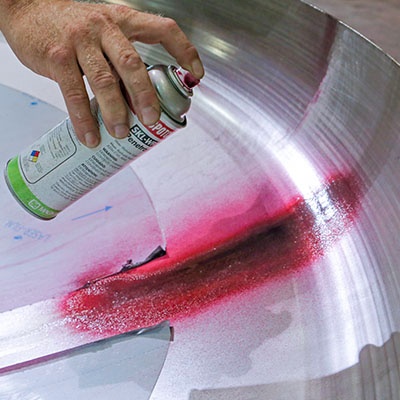
Automatic Water Washable Penetrant Testing System
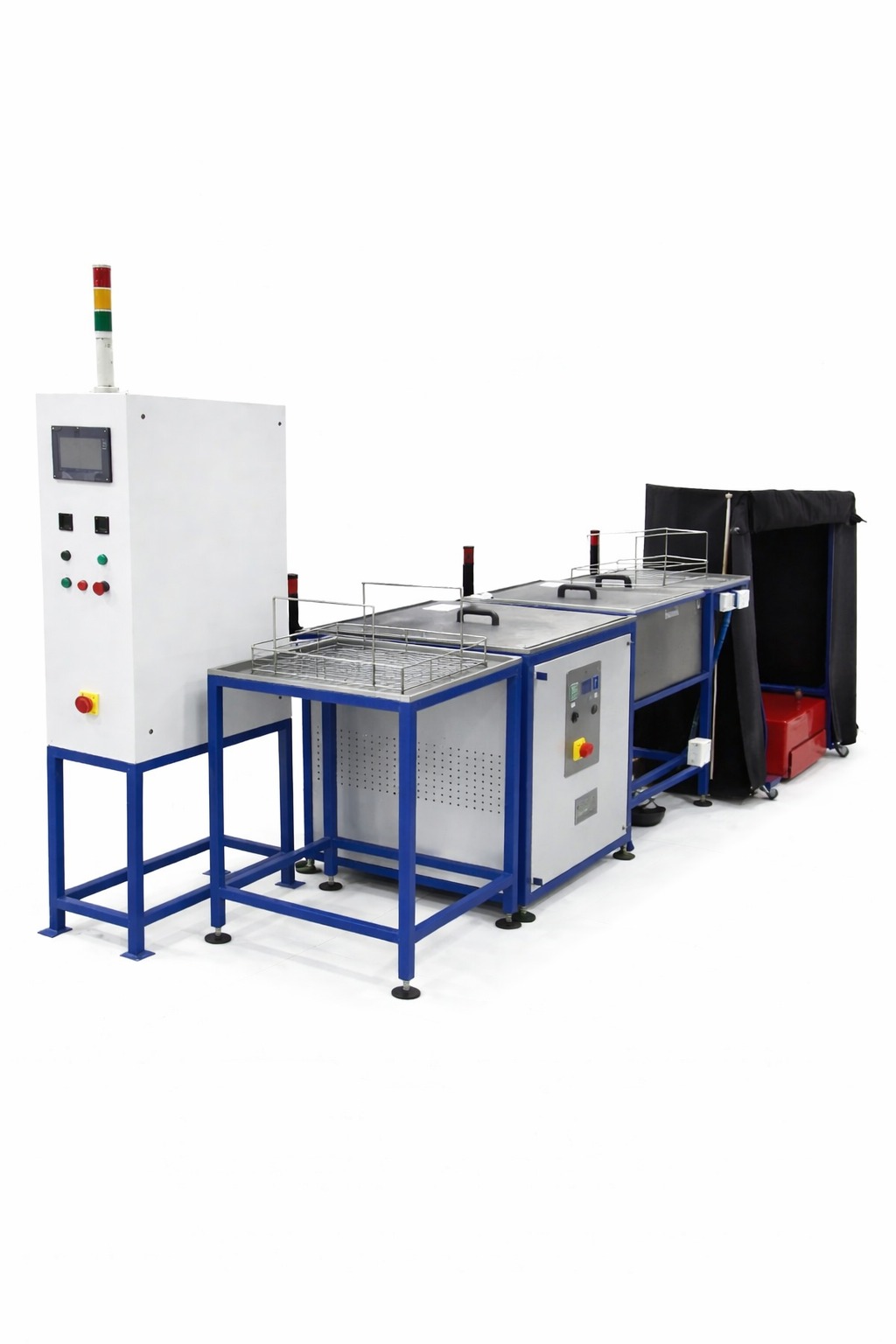
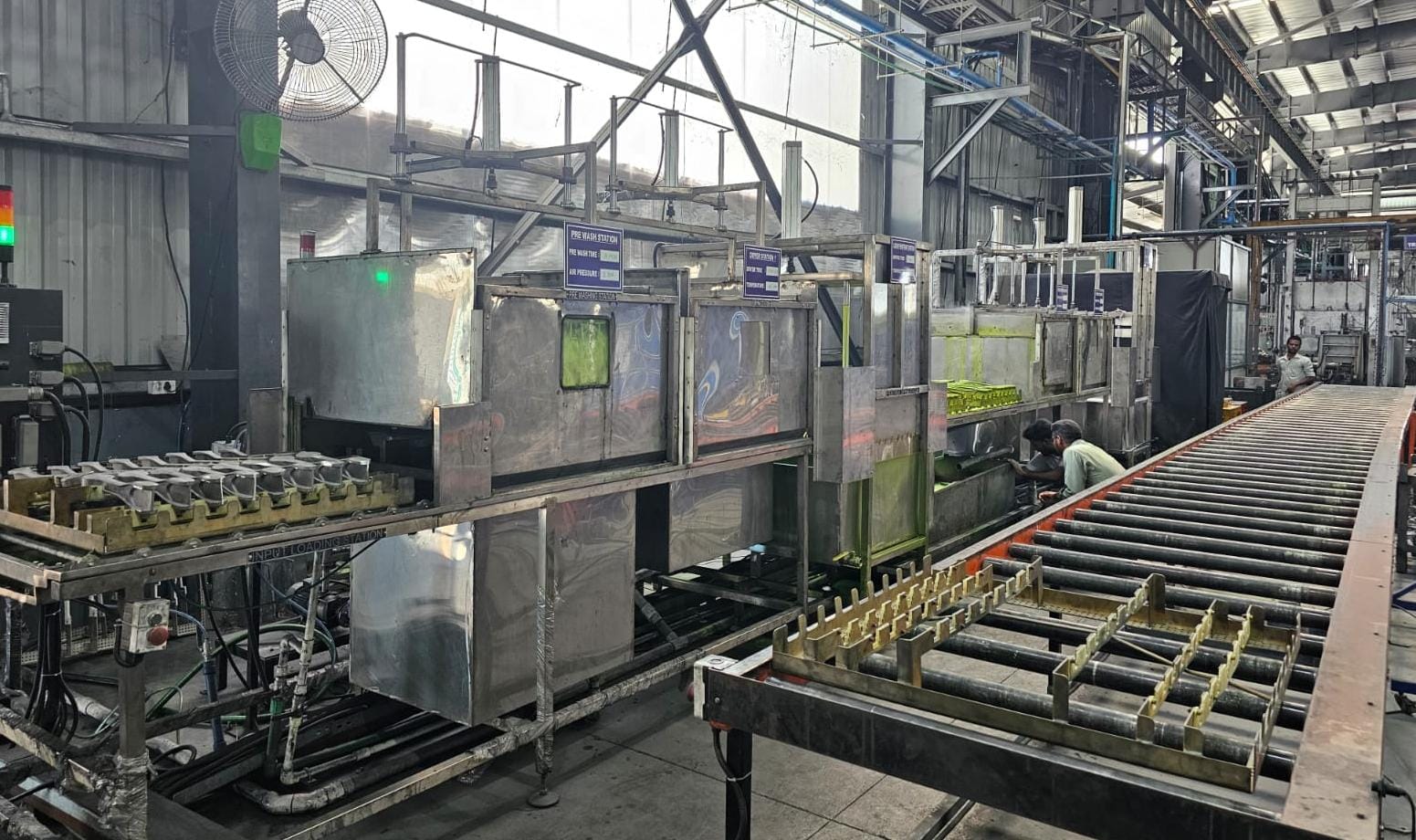
Fully automatic liquid penetrant line - from pre-wash to inspection - for repeatable detection of surface-breaking defects on production parts.
Key specifications
| Inspection type | Visible dye / fluorescent |
|---|---|
| Sensitivity level | Level 1 to Level 4 |
| Configurations | Manual, semi-automatic, fully automatic |
| Throughput | Batch or continuous production |
| Dryer temperature | 50 C to 120 C |
| UV intensity (fluorescent) | 1000 uW/cm2 or more |
| Compliance | ASTM E1417 / ISO 3452 |
| Component size | As per customer requirement |
Need a quote or a custom build?
Tell us your part, volume and inspection requirement — our engineers will size the right configuration.
WhatsApp usKey features
High-sensitivity detection
Suits complex geometries and critical components.
Visible dye or fluorescent
Choose the system that matches your acceptance standard.
Manual to fully automatic
Scales from bench use to a production line.
Controlled process
Optimised chemical consumption and process control.
The liquid penetrant testing (PT) system detects surface-breaking defects such as cracks, porosity, seams and laps in non-porous materials. Based on capillary action, it gives reliable, repeatable inspection across a wide range of industrial applications, and is available in visible-dye and fluorescent versions in manual, semi-automatic and fully automatic configurations.
Applications
- Automotive components (gears, shafts, castings)
- Aerospace components
- Weld inspection
- Forgings and machined parts
- Valves and pressure components
Process flow of the automatic line
- Loading station
- Pre-washing station
- Hot air dryer
- Penetrant dipping station
- Dwell stations 1 and 2
- Excess penetrant washing station
- Drying station
- Dwell station
- Dry developer cloud chamber
- Inspection station (2 persons)
- Post-washing station
- Hot air dryer
- Unloading station
Pre-washing station
The first and most critical stage: it removes oil, grease, dirt, scale and paint so defects are fully open and detectable.
Penetrant dipping and dwell
Components are fully immersed so the penetrant can enter cracks, porosity and laps; the dwell-to-dryer stage gives it the time it needs and dries the parts properly before development.
Developer cloud chamber and inspection
A fine, uniform developer layer draws the penetrant out so indications become visible; the inspection and unloading station is where parts are evaluated and cleared or rejected.
Planning a penetrant testing line?
Tell us your component size, throughput and standard - we will size the stations and drying/inspection set-up.
WhatsApp